
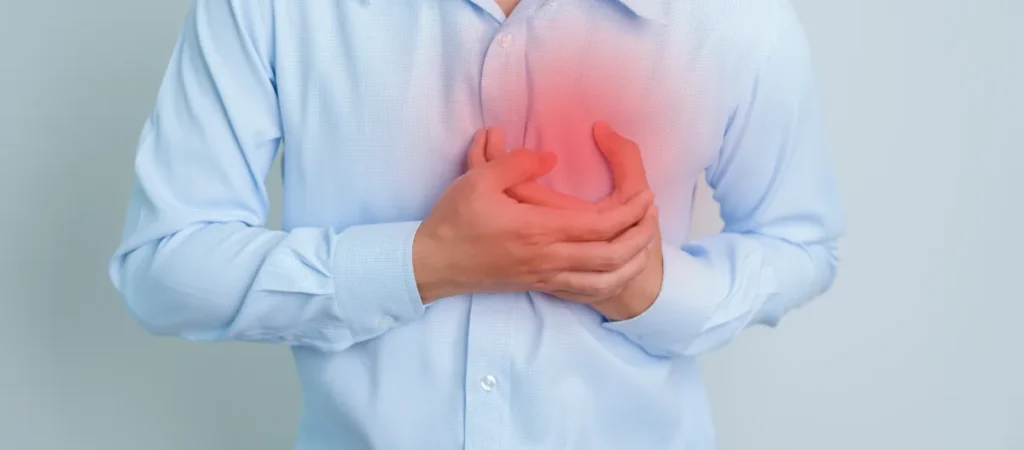
This is one of the most genuinely dangerous diagnostic confusions in medicine. A burning sensation in the chest after a meal reaches for an antacid in most people — and most of the time they are right to do so. But a meaningful number of cardiac events every year are initially dismissed as acidity, gas, or indigestion — by the patient, sometimes by the first doctor they see, and occasionally for long enough that the window for optimal treatment has passed. As the best cardiologist in Aurangabad, Dr. Kuldeep Totawar at Sonobeat Heart Care has seen both sides of this: patients who came in worried about their heart and had acidity, and patients who came in convinced they had acidity and were having a heart attack.
The reason this confusion happens is anatomical. The heart and the oesophagus sit close to each other in the chest and share overlapping nerve pathways. Both can produce a burning, pressured, or uncomfortable sensation in the same general region. The symptoms are genuinely similar and distinguishing them requires attention to specific features that most people do not know to look for. Find Sonobeat Heart Care on Google if you are ever unsure — it is always better to check.
Have heart concerns? Book An Appointmentat Sonobeat Heart Care today.
How Acidity and Cardiac Pain Actually Feel — and Where They Overlap
Classic Acidity / GERD Symptoms
• Burning sensation in the chest or throat, typically after eating, bending forward, or lying down
• Sour or bitter taste in the mouth from acid reflux
• Symptoms that improve with antacids, milk, or sitting upright
• Symptoms that are clearly related to specific foods — spicy food, fatty meals, coffee, alcohol
• Bloating, belching, or a feeling of fullness associated with the discomfort
• No radiation of the discomfort to the arm, jaw, or back
Classic Cardiac Pain Symptoms
• Pressure, tightness, squeezing, or heaviness in the centre or left side of the chest — patients often describe it as someone sitting on their chest
• Pain that radiates to the left arm, shoulder, jaw, neck, or back
• Symptoms that come on with physical exertion and settle with rest — the classic pattern of angina
• Associated breathlessness, sweating, nausea, or a sense of impending doom
• Symptoms that do not improve with antacids
• Pain that lasts more than 15 to 20 minutes without relief
The single most important distinguishing feature is radiation. Acidity does not radiate to the arm, jaw, or back. If your chest discomfort is spreading to any of these areas, treat it as cardiac until proven otherwise.
The Features That Should Always Prompt Urgent Evaluation
The following features — individually or in combination — mean you should seek medical evaluation immediately rather than reaching for an antacid:
• Chest pain or pressure that radiates to the left arm, jaw, neck, or back
• Chest discomfort accompanied by sweating, particularly cold or clammy sweating
• Chest discomfort accompanied by breathlessness that is disproportionate to activity
• Nausea or vomiting alongside chest discomfort — particularly in older patients and diabetics, where atypical presentations are more common
• Chest discomfort in a patient with known risk factors — diabetes, hypertension, high cholesterol, smoking, family history of heart disease, or a previous heart attack
• Chest pain that wakes you from sleep
• A sense of profound weakness, dizziness, or feeling that something is seriously wrong
Why Diabetic Patients and Women Are at Particular Risk of Misdiagnosis
Diabetic Patients
Diabetes damages the nerves that transmit pain signals from the heart. As a result, diabetic patients often experience silent ischaemia — significantly reduced blood supply to the heart with minimal or no chest pain. Their cardiac events may present only as unexplained breathlessness, nausea, fatigue, or a vague sense of unwellness. Diabetic patients with any unexplained cardiac-type symptoms should have a lower threshold for cardiac evaluation than non-diabetic patients.
Women
Women more commonly experience atypical cardiac symptoms than men — fatigue, jaw pain, upper back pain, nausea, and breathlessness are more frequent presentations of heart attack in women compared to the classic crushing chest pain seen more commonly in men. This atypical presentation pattern means women’s cardiac symptoms are more frequently attributed to non-cardiac causes, leading to delayed diagnosis and treatment.
What Happens When You Come to Sonobeat Heart Care With Chest Symptoms
At Sonobeat Heart Care, every patient presenting with chest symptoms receives a structured evaluation that begins with a detailed clinical history and examination, followed by a resting ECG. Depending on the findings, this may be followed by blood tests for cardiac enzymes, a 2D echocardiogram, or a TMT stress test to systematically evaluate the heart’s structure and function.
Dr. Kuldeep Totawar takes a thorough history that specifically explores the character, location, radiation, and triggers of the symptoms — the clinical details that distinguish cardiac from non-cardiac chest pain with the highest reliability. If the evaluation is reassuring for a non-cardiac cause, that is excellent news. If it identifies a cardiac problem, early detection allows treatment to begin at the most effective stage.
When to Call Emergency Services Instead of Driving to a Clinic
If you have sudden, severe chest pain — particularly with radiation, sweating, breathlessness, or a feeling that something is seriously wrong — call emergency services or have someone drive you to the nearest hospital emergency department immediately. Do not drive yourself. Do not wait to see if the symptoms settle. In an acute heart attack, the first 90 minutes from symptom onset to opening a blocked artery (door-to-balloon time) is the most critical determinant of how much heart muscle is saved. Every minute matters.
When in doubt, always treat chest pain as cardiac first. The cost of a false alarm is a reassuring ECG and a brief hospital visit. The cost of dismissing a genuine cardiac event can be irreversible.
Have heart concerns? Book An Appointment at Sonobeat Heart Care today.
Frequently Asked Questions
Q: Can acidity cause chest pain that feels exactly like a heart attack?
Yes. Severe oesophageal spasm and GERD can produce chest pain that is remarkably similar to cardiac pain in character and intensity. This is why the clinical evaluation — including an ECG and sometimes blood tests — is necessary to distinguish the two. Do not attempt to self-diagnose based on symptom character alone.
Q: My ECG was normal. Does that mean my heart is fine?
A normal resting ECG is reassuring but does not exclude coronary artery disease. Many patients with significant coronary narrowing have a completely normal resting ECG. A TMT stress test or further cardiac imaging may be recommended depending on your symptoms and risk factors.
Q: I have had acidity for years. Could it have become a heart problem?
Longstanding acidity and heart disease are separate conditions and one does not cause the other. However, both can coexist. If your longstanding acidity symptoms have changed in character, are occurring at rest, are accompanied by new symptoms, or are not responding to treatment as they used to, a cardiac evaluation is appropriate to ensure the new pattern is not cardiac in origin.
Q: At what age should I start getting my heart checked even without symptoms?
For individuals with risk factors — diabetes, hypertension, high cholesterol, smoking, obesity, or a family history of early heart disease — a baseline cardiac evaluation including ECG and 2D echo is recommended from age 35 to 40. For those without risk factors, a first cardiac check at age 40 to 45 is generally advised.
Chest Discomfort That You Are Not Sure About Deserves a Proper Answer.
Dr. Kuldeep Totawar at Sonobeat Heart Care provides thorough cardiac evaluations for patients with chest symptoms, with same-day ECG and echo available.
Visit sonobeatcare.com or find us on Google to book your consultation today.
Have heart concerns? Book An Appointmentat Sonobeat Heart Care today.
Google: Sonobeat Heart Care on Google | Cardiologist: Dr. Kuldeep Totawar | About: About Sonobeat Heart Care